India Eyes Another 500 GW Clean Energy Boost: Inside the Plan to Double Down on Renewables
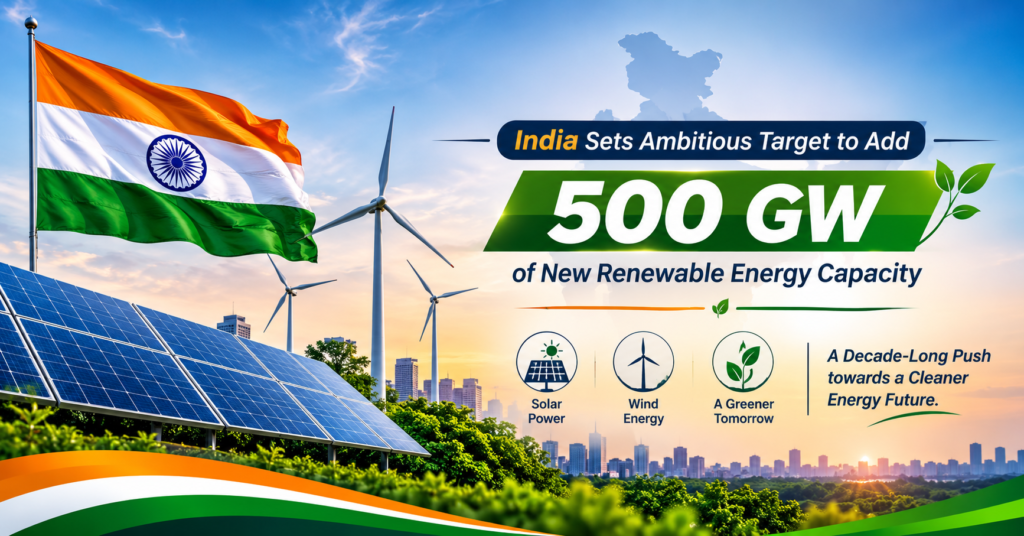
India has already crossed the halfway mark in its clean power journey, and now it wants to go much further. Prime Minister Narendra Modi has announced a bold goal to add another 500 Gigawatts of new non-fossil capacity over the next 10 to 11 years. He admitted the target is somewhat difficult, but said he has full faith in the capability of the country and its people.
The Announcement at the Renewable Energy Summit
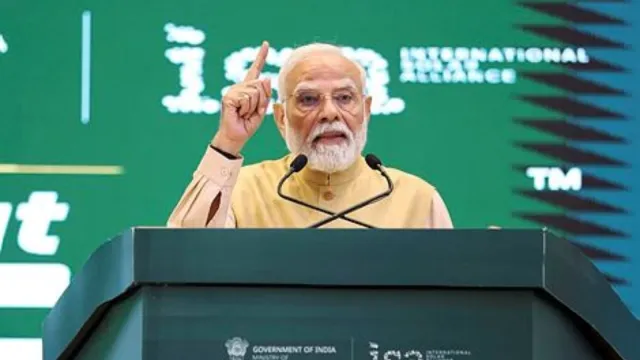
The target was announced on November 2 while the Prime Minister inaugurated the Bharat Renewable Energy Summit & Expo 2026 at Bharat Mandapam in New Delhi. The gathering brought together industry leaders, investors, startup representatives and senior officials from India and abroad.
This year’s event is especially wide in scope. It coincides with the Ninth Assembly of the International Solar Alliance and includes delegates from the Fourth Conference on Green Hydrogen.
Where India Stands Today?
India’s present position gives the new target a strong base. According to the Prime Minister:
- India now ranks among the top three nations in solar and renewable energy.
- Over 50 percent of the country’s installed power capacity comes from non-fossil sources.
- Nearly 300 Gigawatts has already been achieved toward the 500-Gigawatt goal set for 2030.
A 12-Year Journey of Promises, Passion and Performance
The Prime Minister described India’s clean energy story over the last 12 years as one defined by Promises, Passion and Performance. At the COP-26 summit, India committed to reach 500 Gigawatts of non-fossil capacity by 2030.
India also met its Paris pledge of drawing half of its installed power capacity from non-fossil sources in 2025, which was five years ahead of schedule. This record of delivering early is what gives confidence to the next, larger ambition.
The New Goal at a Glance
| Detail | Information |
|---|
| Existing goal | 500 GW non-fossil capacity by 2030 (COP-26 commitment) |
| Progress so far | Nearly 300 GW achieved |
| Non-fossil share of installed capacity | Over 50 percent |
| New target | Add another 500 GW of non-fossil capacity |
| Timeline | Next 10 to 11 years |
| Paris pledge | Fulfilled in 2025, five years early |
Why Clean Energy Is Central to the Plan?
The Prime Minister linked the target to energy security. He said recent global disruptions, from the pandemic to the ongoing West Asia crisis, have shown the direct link between energy security and economic security. Continued dependence on fossil fuels, he warned, will keep disrupting the world economy because these reserves are limited and concentrated in a few regions. Clean energy, in contrast, has boundless potential that is accessible to everyone.
He added that ten years of investment and reforms in clean energy protected India from the worst effects of external shocks. In his words, the crisis could have been much more severe without those steps.
Confidence, and a Message for the World
The Prime Minister admitted the new target is not easy, yet he said he has faith in the country’s capability and declared, “We will do it!” He also stressed that India wants to share the benefits of its experiences and innovations with all of humanity, and that its successes in this field will be useful for many countries.
What Comes Next
Reaching another 500 Gigawatts will require sustained effort, investment and innovation. The Prime Minister stressed that the nation must keep up its pace rather than rest on past achievements. If India succeeds, it will not only strengthen its own energy security but also set an example for other nations looking to build a cleaner and more secure future.
A Junior Journalist passionate about reporting accurate, engaging, and reader-focused news across technology, business, education, health, entertainment, lifestyle, and current affairs. Dedicated to researching reliable sources, verifying information, and producing clear, factual content that follows ethical journalism standards.