PM Surya Ghar Scheme: How PM Surya Ghar Scheme Is Powering a Rooftop Revolution?
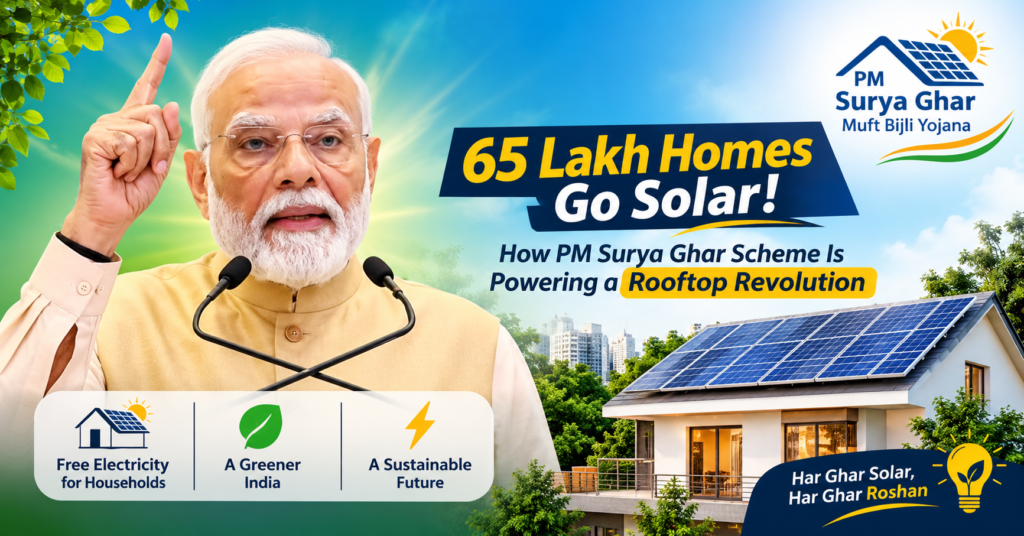
Every six days, one lakh more Indian households choose to put a solar panel on their roof. That steady pace has taken the PM Surya Ghar Muft Bijli Yojana past a major milestone, with more than 65 lakh families now part of the movement. For many of them, the monthly electricity bill has shrunk dramatically, and for some it has disappeared altogether.
PM Surya Ghar Muft Bijli Yojana: The Idea Behind the Scheme
The scheme was launched in February 2024 with a clear goal: to install rooftop solar panels in one crore homes across the country. Its purpose is to put clean power directly in the hands of ordinary families, reduce their dependence on conventional electricity and strengthen the country’s energy security from the ground up.
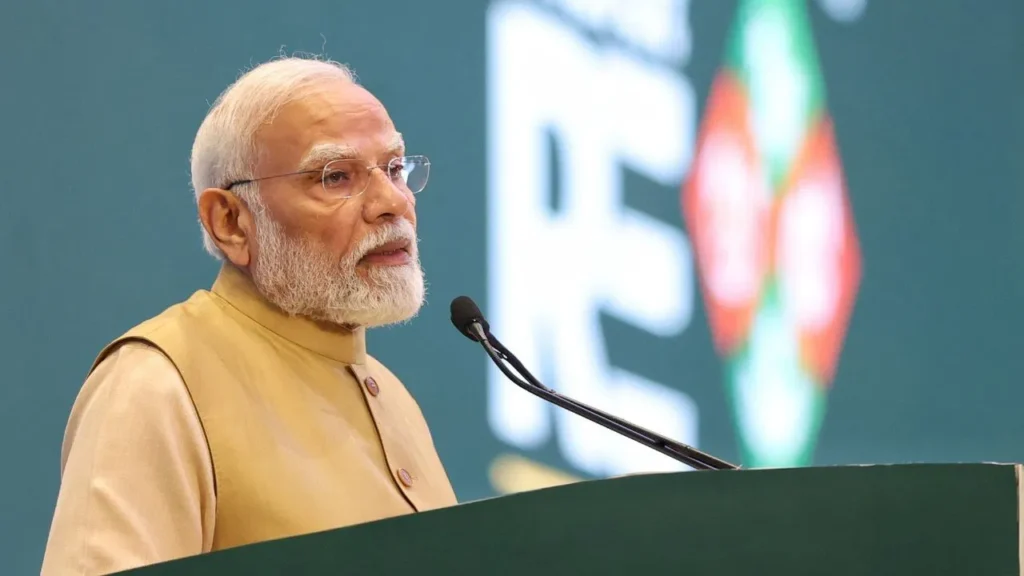
The progress was highlighted by Prime Minister Narendra Modi while inaugurating the Bharat Renewable Energy Summit & Expo 2026 at Bharat Mandapam in New Delhi on November 2.
How Fast Has the Movement Grown?
Within just 24 to 25 months of its launch, more than 65 lakh households have joined the scheme. The Prime Minister noted that the pace works out to one lakh new homes every six days, which shows how quickly rooftop solar is moving from an idea to an everyday reality.
At this speed, the scheme is well on its way toward its target of one crore homes.
Lower Bills, and Even Zero Bills
The biggest attraction for families is the saving on electricity costs. According to a study cited by the Prime Minister, rooftop solar has reduced household electricity bills by roughly 76 percent.
The benefits go further for many families:
- Lakhs of households now see their electricity bills fall to zero.
- Families with surplus power can sell it to the grid and earn money.
- Homes shift from being only consumers of electricity to becoming small producers as well.
Why It Matters for Energy Security?
The Prime Minister said this scheme can give great strength to energy security in many countries, and that India’s successes in this field will be useful to others in the world. He stressed that the future of energy security lies in clean energy, since fossil fuel reserves are limited and concentrated in a few regions.
When millions of homes generate their own power, the country relies less on fuel that can be disrupted by global crises. Households become part of the solution rather than being exposed to price shocks.
A Call for Innovation in Household Solar
Looking ahead, the Prime Minister urged startups, IITs, innovators and entrepreneurs to design round-the-clock, all-weather solar models that can meet the maximum energy needs of a household. He pointed to two examples in particular:
- Rooftop solar cooking, to reduce dependence on imported gas.
- Home solar charging for electric two-wheelers and cars.
According to him, such solutions can help middle-class families save thousands of rupees every year.
The Bigger Picture
The rooftop movement is one part of India’s wider clean energy journey. The country now has over 50 percent non-fossil installed capacity, with nearly 300 Gigawatts already achieved toward its 500-Gigawatt target for 2030. The Prime Minister said that bringing solar into homes, offices, farms and industry is a central part of that effort.
What Lies Ahead
With 65 lakh households already on board and new homes joining at a rapid pace, the PM Surya Ghar scheme shows how policy and public participation can work together. The next challenge is to reach the one-crore mark and to make household solar smarter, more reliable and more affordable through new technology.
A Junior Journalist passionate about reporting accurate, engaging, and reader-focused news across technology, business, education, health, entertainment, lifestyle, and current affairs. Dedicated to researching reliable sources, verifying information, and producing clear, factual content that follows ethical journalism standards.