Jeffrey Sachs Predicts India Could Become the World’s Largest Economy by 2100
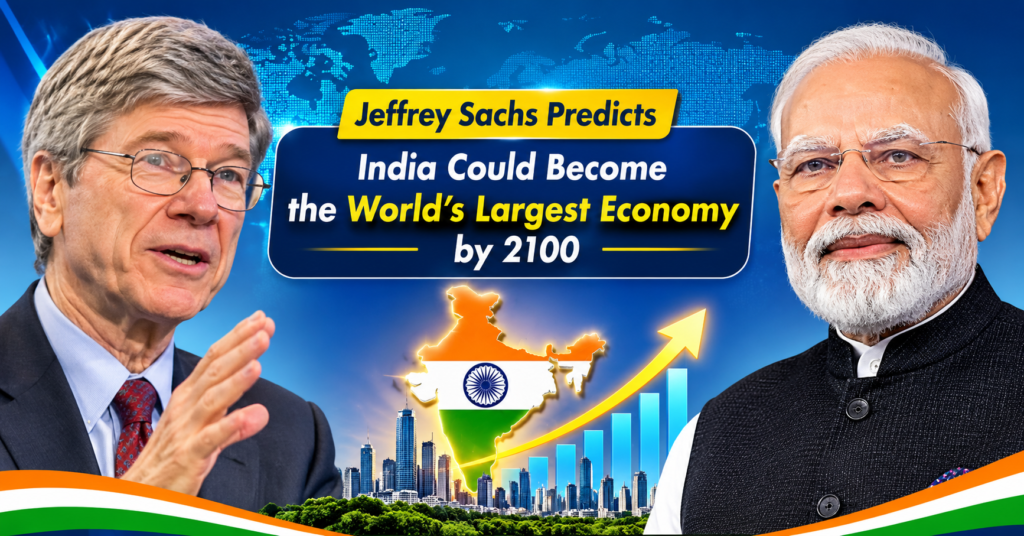
India’s rise on the global stage has found a prominent new voice. American economist Jeffrey Sachs says the country is on course to become the largest economy in the world by the end of this century, as the world’s economic weight moves steadily towards Asia and Africa. He called it a trend that is “absolutely in the deep trends” of history.
Sachs Makes the Forecast at a Varanasi Symposium
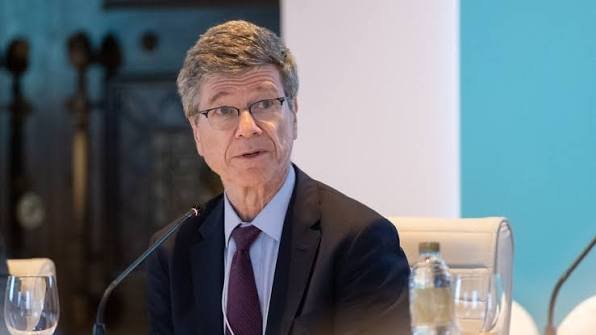
Dr. Jeffrey Sachs, a Columbia University professor and widely followed economist, made the prediction while speaking at the World Symposium on “Ancient Wisdom for Modern Challenges” in Varanasi. He said India could have twice the population of China by 2100 and, as a result, become the single largest economy in the world.
Sachs also spoke to a news channel about India’s rapid rise in the global economy, a conversation that also touched on the Adani Group.
Why Population Gives India a Big Advantage?
According to Sachs, India’s population is expected to stabilise at around 1.7 billion by 2100, while China’s population is projected to decline. He said India will most likely have twice China’s population by the end of the century, which he called quite astounding.
Such a large population gives India a natural advantage in the size of its economy, and Sachs believes this will push it past other nations in absolute terms.
From Third Largest Today to Second by 2050
India is currently the world’s third largest economy, behind the United States and China. Sachs projects that India will overtake the United States to become the world’s second largest economy by 2050, before moving to the top spot later in the century.
Asia and Africa Set to Shape the Century
Sachs said the shift in population and economic weight towards Asia and Africa will be among the defining trends of the century. He pointed out that by 2100, about three-quarters of the world is likely to live in Asia and Africa, with Africa alone accounting for around 30 percent of the global population.
In his view, this reflects a move towards a multipolar world, where the era of Western economic dominance is coming to an end and global economic power returns strongly to Asia and Africa.
The Conditions India Must Meet
Sachs stressed that this outcome is not guaranteed. India’s success depends on following the “right principles,” which include:
- Continuous, heavy investment in quality education for young people
- Strong infrastructure development
- Long-term measures to ensure climate safety
A missed opportunity given the director's past work
Devashish Makhija has built a reputation on smaller, more grounded films that explore social prejudice and marginalisation with a level of restraint that Gandhari abandons almost entirely.
Where his earlier work found humanity in bleak, unglamorous settings, this film reaches instead for glossy, mainstream vigilante-thriller beats, training-montage energy included, that sit uneasily against its heavier themes of child trafficking and gender-based violence.
What the Forecast Means
The prediction is a long-term view built on demographic and economic trends rather than a short-term estimate. It adds to the growing global conversation about India’s future role, but it also carries a clear message: size alone will not decide the outcome. The choices India makes on education, infrastructure and climate will determine how much of this potential becomes reality.
A Junior Journalist passionate about reporting accurate, engaging, and reader-focused news across technology, business, education, health, entertainment, lifestyle, and current affairs. Dedicated to researching reliable sources, verifying information, and producing clear, factual content that follows ethical journalism standards.