Bharat Renewable Energy Summit 2026: India’s Bold Clean Energy Plan Under the Lens
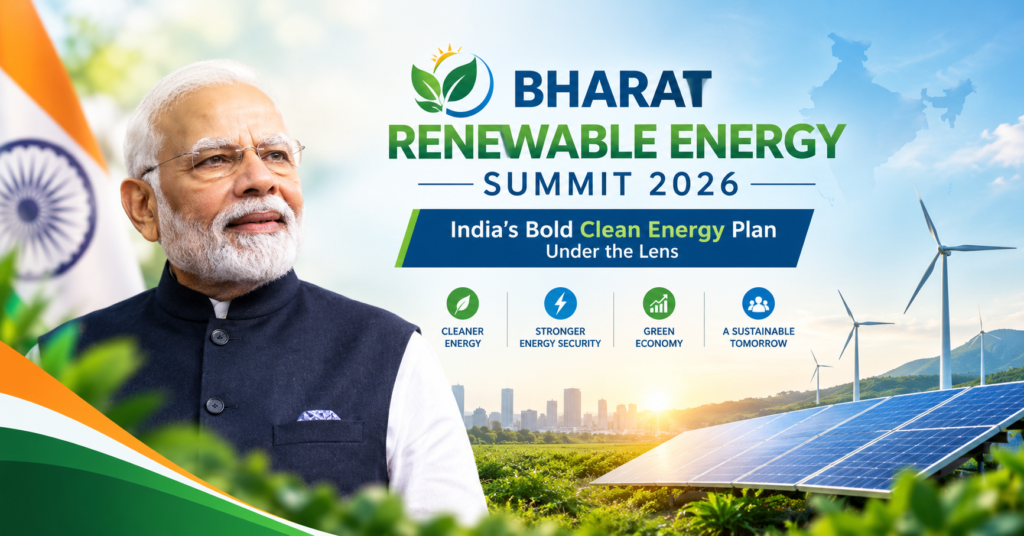
India is no longer asking whether it can build a clean energy system. It is asking how fast it can scale one. At the Bharat Renewable Energy Summit & Expo 2026 in New Delhi, the message was clear: the next phase will be won through innovation, manufacturing strength and large-scale investment, not just by adding capacity.
A Summit Where Solar, Hydrogen and Global Climate Goals Meet
The summit was inaugurated on November 2 at Bharat Mandapam and brought together industry leaders, investors, startups and international delegates. It coincided with the Ninth Assembly of the International Solar Alliance and the Fourth Conference on Green Hydrogen, making it a rare meeting point for several clean energy conversations.
The timing matters. Recent global energy shocks have shown how closely energy security is tied to economic security. India’s argument is that years of investment in clean energy helped it absorb those shocks better than it otherwise could have.
India’s Strong Starting Point and a New 500 GW Goal
Nearly 300 GW of non-fossil capacity is already in place, and over 50 percent of installed power capacity now comes from non-fossil sources. The Paris commitment of reaching that 50 percent share was met in 2025, five years early.
The new goal is to add another 500 GW of non-fossil capacity over the next 10 to 11 years. The target is difficult, but the record of early delivery gives it credibility.
Key Achievements Driving the Clean Energy Push
Rooftop solar: Over 65 lakh households have joined the PM Surya Ghar Muft Bijli Yojana.
Farm power: More than 30 lakh farmers have benefited from solar irrigation under PM-KUSUM.
Public buildings: Over 44,000 government buildings run on solar, generating large annual savings.
Module manufacturing: Capacity has crossed 200 GW.
Cell manufacturing: Capacity has reached nearly 40 GW.
Domestic Manufacturing: The Foundation of Self-Reliance
The sharpest change in the data is manufacturing. Solar module capacity has grown from about 2 GW a decade ago to over 200 GW today, a hundredfold rise that reduces import dependence and supports Make in India and Atmanirbhar Bharat.
Cell capacity, at nearly 40 GW, is still far smaller than module capacity. Closing that gap is a key task ahead, because a deeper domestic supply chain makes the whole sector more resilient.
From Adoption to Innovation: Solar Solutions for Everyday Life
The summit’s strongest theme was that adoption alone is no longer enough. Startups, IITs, researchers and entrepreneurs were urged to build practical solutions such as:
Solar cooking systems to cut reliance on imported gas.
Home charging for electric two-wheelers and cars.
Round-the-clock, all-weather household solar models.
Specialised solar equipment for agriculture and dairy work.
Battery Storage: The Missing Link for Reliable Power
Solar and wind output depends on the weather, so advanced storage is essential for a steady electricity supply. Indigenous battery technology is also a major opening for Indian startups, manufacturers and research institutions.
Green Hydrogen and Stronger Grids to Carry the Load
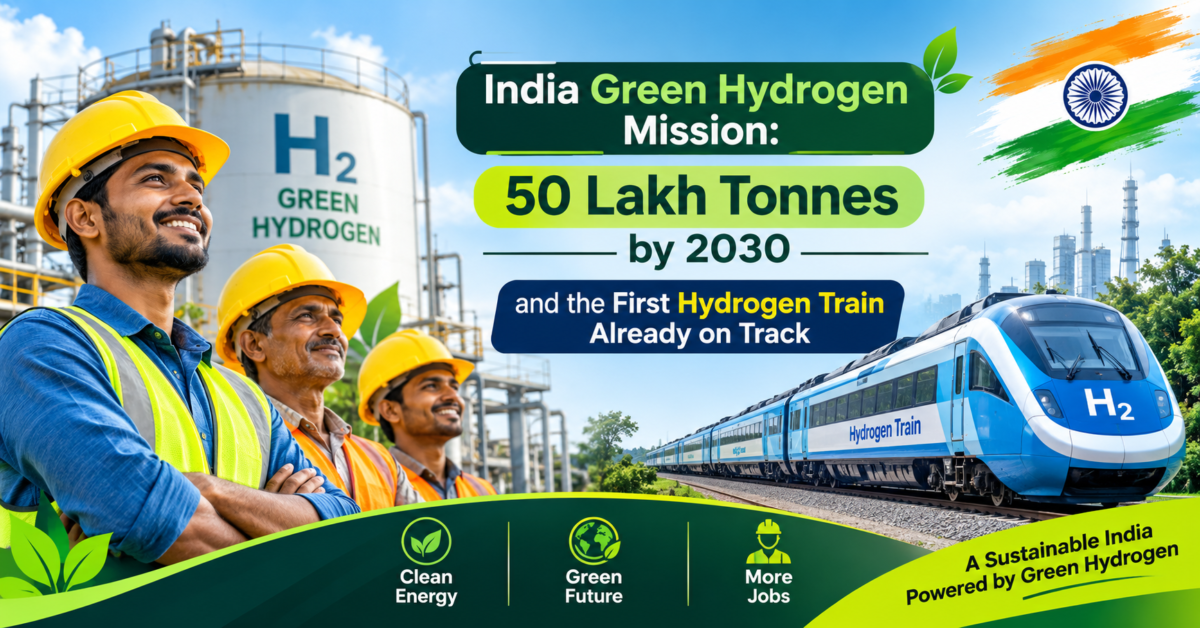
Under the National Green Hydrogen Mission, India aims to produce 50 lakh tonnes of green hydrogen a year by the end of the decade, with uses in transport and industry. Green Energy Corridors and an improved grid will carry power from renewable-rich regions to areas of high demand. Without them, new capacity cannot reach the people who need it.
Investment Momentum Points to a Growing Opportunity
Investment Indicator
Amount
Over the past decade
₹15 lakh crore+
Since the 2024 RE-INVEST Summit
₹6 lakh crore+
Projected opportunities by end of decade
₹20 lakh crore+
More than ₹6 lakh crore has arrived in just two years, which shows investment is speeding up. The projected opportunity of over ₹20 lakh crore points to demand across solar manufacturing, wind, hydrogen, storage and infrastructure.
Challenges That Could Slow the Transition
Targets are only the first step. Success will depend on:
Expanding storage and transmission infrastructure.
Making clean technologies more affordable.
Strengthening domestic manufacturing further.
Encouraging private investment and research.
Training skilled workers for installation and maintenance.
If handled well, the expansion could also create jobs across manufacturing, transport, installation and servicing.
The Road Ahead: Turning Targets into Reality
The summit shows a country shifting from building capacity to building an ecosystem. The next energy revolution will depend on turning targets into dependable technology, strong infrastructure and affordable solutions, with innovation, investment and cooperation moving together.
A Junior Journalist passionate about reporting accurate, engaging, and reader-focused news across technology, business, education, health, entertainment, lifestyle, and current affairs. Dedicated to researching reliable sources, verifying information, and producing clear, factual content that follows ethical journalism standards.
Read More
Working closely with the editorial team, the author contributes news articles, feature stories, explainers, and trending updates while continuously developing reporting, writing, and digital publishing skills. Every article is prepared with attention to accuracy, clarity, and relevance to help readers stay informed about important events and emerging trends.
When and where was the summit held?
It was inaugurated on November 2, 2026, at Bharat Mandapam, New Delhi.
What is India’s new renewable energy target?
India aims to add another 500 GW of non-fossil capacity over the next 10 to 11 years.
How much solar manufacturing capacity does India have?
Module capacity has crossed 200 GW, and cell capacity is nearly 40 GW.
How much investment has the sector attracted?
Over ₹15 lakh crore in the past decade, including over ₹6 lakh crore since the 2024 RE-INVEST Summit.
What is the green hydrogen goal?
To produce 50 lakh tonnes of green hydrogen a year by the end of the decade.