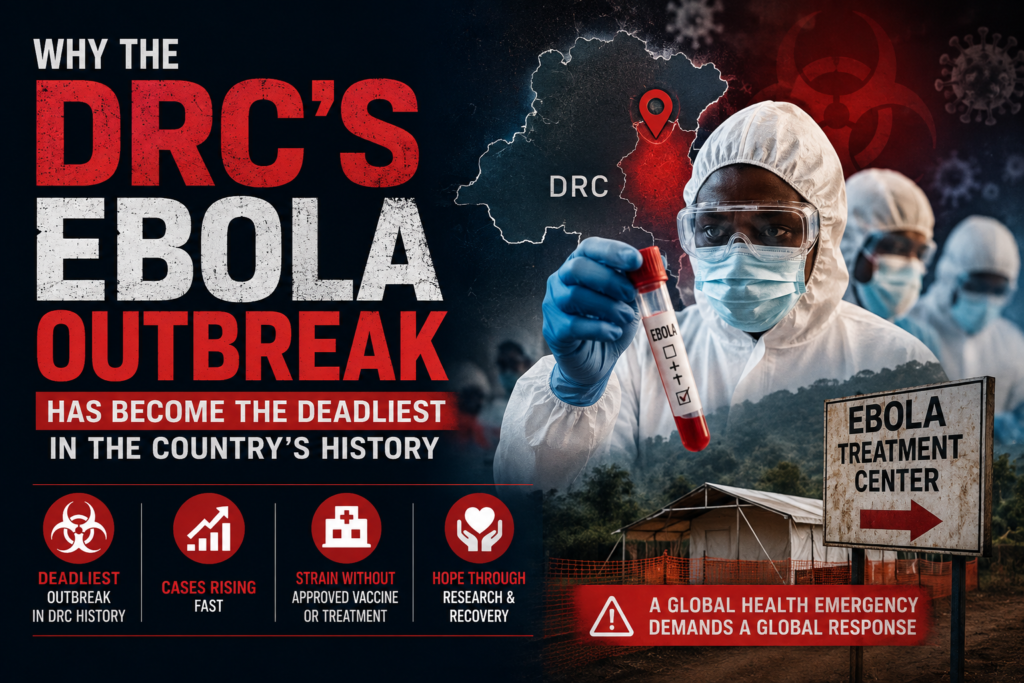
Why the DRC's Ebola Outbreak Has Become the Deadliest in the Country's History?
A Grim Milestone No One Wanted to Reach
The Democratic Republic of the Congo has now recorded more Ebola deaths than at any other point in its history, and the outbreak isn’t slowing down. Government figures put the death toll at more than 2,325, a number that has already overtaken the country’s previous worst outbreak from 2018 to 2020. Confirmed infections stand at nearly 4,945, with over a hundred new cases logged in a single recent 24-hour stretch.
What makes this outbreak especially alarming isn’t just the size of the numbers, it’s the speed at which they’ve climbed. Health officials are now warning this could become the deadliest DRC Ebola outbreak the world has ever recorded.
How Does This Compare to Past Outbreaks?
For context, the devastating 2014-16 West Africa outbreak, spread across Guinea, Liberia, and Sierra Leone, remains the largest on record, with roughly 28,600 cases and over 11,000 deaths. That outbreak took nearly five months to reach its first thousand deaths. This one has already passed the two-thousand mark in under three months.
Health officials describe the pace bluntly: roughly one person is dying from the virus every half hour. That kind of velocity is rare even by Ebola’s already brutal standards, and it’s a major reason the World Health Organization is treating this as a global health emergency rather than a regional crisis.
Why Is This Particular Strain So Hard to Contain?
Much of the current surge traces back to the Bundibugyo strain, a rarer variant of the virus for which no approved vaccine or treatment currently exists. That gap matters enormously. With more common Ebola strains, health workers can lean on established vaccines to slow transmission quickly. Here, they’re largely working blind while trials for two experimental treatments and two candidate vaccines are still underway in Ituri province, the epicenter of the outbreak.
There’s also a troubling pattern showing up in the data that doesn’t usually appear this late into an outbreak. Normally, fatality rates drop over time as contact tracing improves and infected people get identified sooner. Instead, medical teams on the ground report that a large share of cases are still being discovered dangerously late, sometimes only after the person has already died at home rather than in a treatment facility.
Why Are So Many People Dying Outside of Hospitals?
Public health data suggests more than seven in ten deaths from this outbreak are happening in communities rather than in medical facilities, a statistic that points to a deeper problem than just the virus itself. Interviews with residents in affected areas paint a consistent picture: fear, mistrust, and misinformation are keeping sick people away from treatment centers until it’s often too late to help them.
Some families have described trying to treat relatives at home out of fear of what happens inside isolation facilities, only bringing them in once their condition had become critical, sometimes too late for the journey itself. Rumors linking the illness to poisoning rather than infection have also slowed people from seeking care early, when survival odds are highest.
What's Making the Response So Difficult?
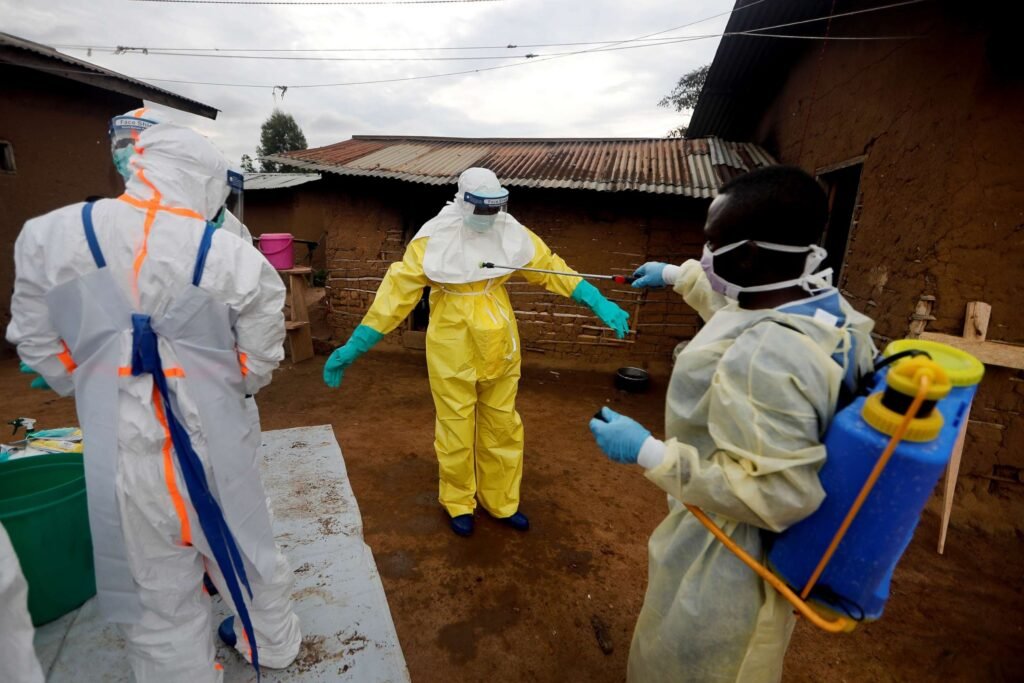
The outbreak’s response has been complicated by more than just the science. Attacks on healthcare facilities, unpaid health workers going on strike, and years of instability in the region have all made it harder to move quickly. Poor road infrastructure in the affected provinces adds another layer of delay, slowing everything from supply delivery to getting patients to care in time.
Six of the DRC‘s 26 provinces have reported cases, with Ituri province alone accounting for more than 3,400 of them, making it the clear center of the crisis.
Is the Outbreak Spreading Beyond the DRC's Borders?
Neighboring Uganda has reported at least 20 cases, all concentrated in the capital, Kampala, but there’s genuinely encouraging news here. No new local transmission has been recorded there since late June, and the country was officially declared Ebola-free in late July after its last patient recovered and was discharged. It’s one of the few pieces of good news in an otherwise grim picture, and a sign that swift, well-resourced containment can still work when it’s applied early.
Is There Any Reason for Hope?
Despite the severity of the numbers, roughly 1,000 people in the DRC have recovered from the virus, with hundreds more currently receiving treatment or under observation in isolation facilities. Clinical trials for both treatments and vaccines specifically targeting the Bundibugyo strain are already underway, offering a realistic, if not immediate, path toward better outcomes.
The Bottom Line
This outbreak has already become the deadliest in the DRC’s history, and by the World Health Organization’s own assessment, it’s on pace to become the worst the world has ever documented. What’s driving that trajectory isn’t only the virus itself, but a combination of a treatment-resistant strain, delayed detection, and a crisis of trust that’s keeping people away from the care that could save them. The response now underway, from experimental vaccines to community outreach, will determine whether this outbreak’s final chapter looks anything like its opening months.
Author: M Jyosri
A Junior Journalist passionate about reporting accurate, engaging, and reader-focused news across technology, business, education, health, entertainment, lifestyle, and current affairs. Dedicated to researching reliable sources, verifying information, and producing clear, factual content that follows ethical journalism standards.