What the New DHS Rule Means for Indian Professionals?
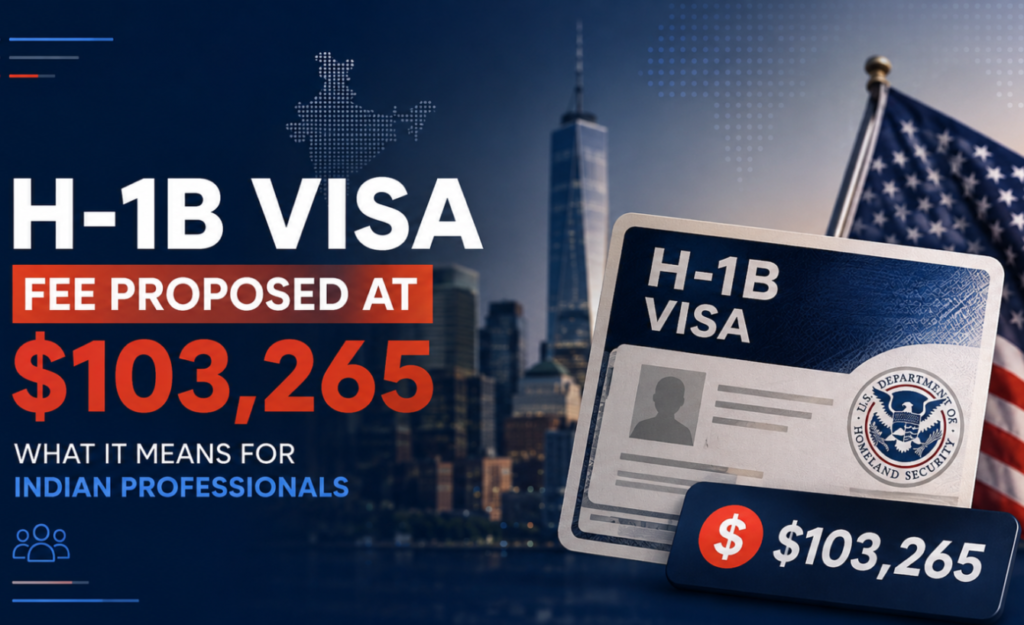
The US Department of Homeland Security has proposed making a steep H-1B visa fee permanent, setting the charge at $103,265 per cap-subject petition. The rule was posted in the Federal Register on August 24, 2026, and now enters a 30-day public comment period before it can be finalized. The move follows a temporary $100,000 fee introduced roughly a year earlier, which is due to expire in September and has already faced legal setbacks in court.
Under the proposed rule, the $103,265 fee would apply to new H-1B petitions that fall under the annual visa cap, including petitions filed for workers with advanced degrees who remain subject to that cap. The charge would be paid by the sponsoring employer at the time of filing, on top of all other existing H-1B-related fees. DHS has described the fee as a cost-recovery measure rather than a straightforward barrier to hiring, though the scale of the increase marks a dramatic jump from historical norms.
How the Fee Has Escalated?
Government fees associated with H-1B filings have traditionally ranged between roughly $2,000 and $5,000. That changed when the administration first imposed a $100,000 fee through a proclamation, a figure that was later struck down by a federal judge in Boston, who ruled it amounted to an unlawful tax that Congress had never authorized. The newly proposed $103,265 figure would replace that earlier, invalidated amount and, if finalized, would make the six-figure charge a permanent fixture of the H-1B process rather than a temporary measure.
Legal Status and Ongoing Challenges
The rule is not yet in effect, and no fee is currently payable under it. An appeals court is still reviewing the broader legal dispute over the administration’s authority to impose such a charge, meaning the proposal could face further judicial hurdles even after the public comment period concludes. Court filings indicate that close to 70 US employers had already paid the earlier $100,000 fee across roughly 85 visa applications as of February, underscoring that some hiring activity has continued despite the legal uncertainty
Who Would Pay and Who Would Be Exempt?
The fee, as proposed, would apply specifically to new H-1B petitions subject to the annual numerical cap. It would not apply to petitions that are cap-exempt, such as those filed by universities and research organizations, nor would it apply to current H-1B renewals, extensions, amendments, or transfers involving workers already counted against the cap in a prior year. Foreign nationals already residing in the United States on student visas who move to H-1B status would also fall outside the fee’s scope under the current proposal.
Impact on Indian Professionals
Indian nationals make up more than 70 percent of H-1B participants, making them the group most directly exposed to any increase in filing costs. A permanent six-figure fee would substantially raise the cost for US employers sponsoring new Indian hires under the cap-subject category, potentially affecting hiring decisions in sectors that rely heavily on the program, including technology, education, and research. Because the fee falls on employers rather than individual visa holders, its practical effect would likely be felt in reduced sponsorship volume or a stronger preference for cap-exempt hiring routes.
What Happens Next?
The proposal is not final. A 30-day public comment period follows the Federal Register notice, after which DHS could revise, delay, or finalize the rule, with officials indicating a decision could come by the end of the year. Given that an earlier version of the fee was already struck down in court, further legal challenges are considered likely once, or if, the rule is finalized.
Author: M Jyosri
A Junior Journalist passionate about reporting accurate, engaging, and reader-focused news across technology, business, education, health, entertainment, lifestyle, and current affairs. Dedicated to researching reliable sources, verifying information, and producing clear, factual content that follows ethical journalism standards.