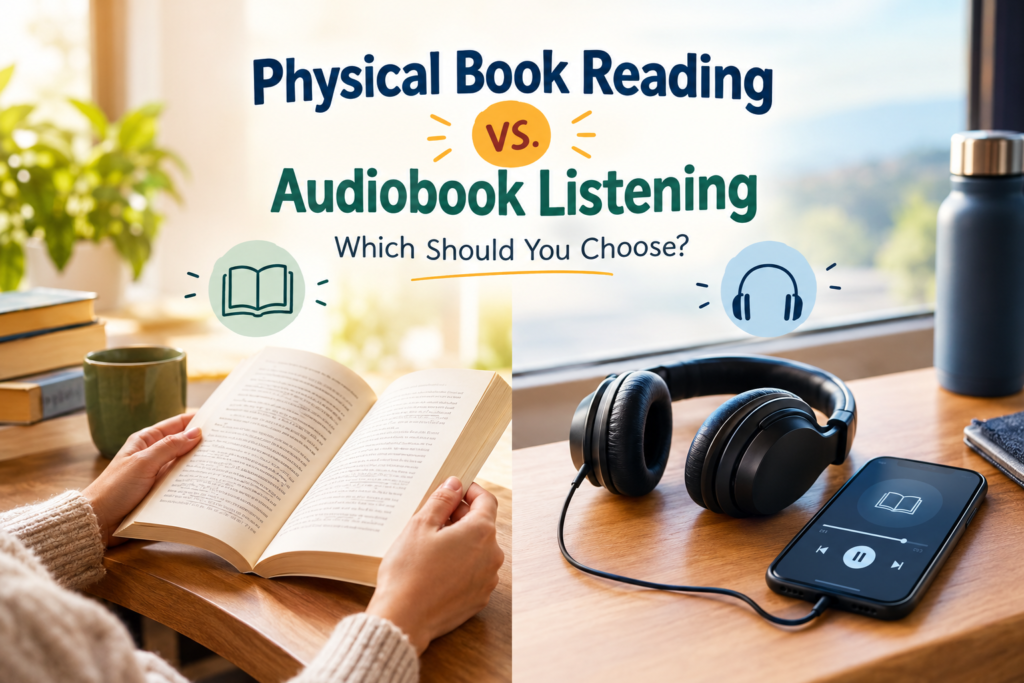
Physical Book Reading vs. Audiobook Listening: Which Should You Choose?
You want to finish more books, but finding a quiet hour to sit down with a paperback feels nearly impossible.
Traditional reading offers focus and control, but between work, commuting, household chores, and your phone’s constant pull, it can feel nearly impossible.
Audiobooks, on the other hand, fit your busy schedule perfectly, but they can increase screen time, which can harm your health and sleep.
In the physical book reading vs. audiobook listening debate, both are valid, and the best choice depends on your goal. Researchers found that reading and listening offer almost similar comprehension.
But does that mean the two formats are truly equal? The answer might surprise you.
What Is the Difference Between Reading and Listening?
Traditional book reading is a visual experience. You engage directly with the text. Move at your own pace. Pause to reflect and revisit passages whenever needed.
Audiobooks are narrated recordings of books. You can listen to them while you drive, walk, clean, exercise, or relax before bed.
In listening vs. reading, the content may be identical, but the experience differs. One is led by your eyes and the other by a narrator.
Benefits of Reading Physical Books
Better Focus and Deeper Engagement
Reading demands sustained attention, and you can pause, reflect, and reread. This is one of the biggest benefits of reading books. Reading for at least 15-20 minutes a day can
reduce the risk of dementia by up to 40%.
Easier Note-Taking and Retention
Physical books make it easier to highlight passages, bookmark pages, jot down notes, and flip back to earlier chapters. Studies suggest that this approach can help readers
recall individual scenes and details more clearly. This one is clearly one major benefit of reading books.
Improves Mental Health Concerns
Reading can also support mental well-being.
Bibliotherapy, a means of treatment that uses written materials, reduces depression and anxiety symptoms more than control conditions in children and adolescents. Many people with sleep troubles also
improve their sleep habits just by reading a book before bedtime.
Benefits of Audiobooks
Read More During Busy Days
Audiobooks turn your “dead” time into reading time. You can listen and almost finish a story while commuting, cooking, walking, cleaning, folding laundry, or exercising. This builds a
productive mindset around “dead” hours.
Engaging Narration and Emotional Impact
A skilled narrator adds something a page cannot always deliver. They mix the story plot with a specific tone, emotion, pauses, and distinct character voices. This approach makes the story more engaging and polished.
Accessibility and Comfort
Audiobooks support readers with visual impairments, dyslexia, reading difficulties, or eye strain. They also offer a relaxed, hands-free alternative to holding a book or reading from a screen. This is one of the major benefits of audiobooks.
Book Reading vs. Audiobooks: Quick Comparison
The audiobook vs. physical book controversy may end when you understand these key differences:
Factors | Physical Book Reading | Audiobook Listening |
Best for | Study, deep focus, note-taking | Commutes, chores, multitasking |
Pace control | Full control; skim or reread | Adjustable speed, narrator-led |
Retention | Stronger for complex material (Delgado 2018; Clinton 2019) | Good for stories and inference (Hansen) |
Convenience | Needs time, hands and eyes | Hands-free and portable |
Experience | Visual, reflective | Auditory, expressive |
Which One Should You Choose?
In the physical book reading vs. audiobook listening choice, use these rules:
Choose book reading if:
- You want to pause when you want and control your pace.
- You are studying for an exam or learning a technical subject.
- You can highlight, annotate, revisit passages, and make short notes.
Choose audiobooks if:
- You can finish a story in one long commute or while doing other work.
- You can enjoy fiction, memoirs, or narrative nonfiction.
- You can explore more stories without increasing screen time.
Why Not Use Both?
You do not have to choose one forever. A hybrid approach often works best.
Read physical books when you get time. Read complex books visually so you can highlight, pause, take notes, and revisit pages as needed.
Listen to lighter novels, memoirs, or narrative nonfiction while commuting or doing chores. You’ll be surprised by how many stories you can finish in the little pockets of time you already have, just by listening to audiobooks.
Switch formats based on your mood, schedule, attention span, and the type of book. No format is “superior.” The only way to complete stories is just reading more consistently.
Final Verdict
In the end, the physical book reading vs audiobook listening question has no single right answer. Choose the format that helps you actually finish the book.
Audiobooks fit well into our busy schedule and win on convenience and accessibility. Print wins on focus, study, cognitive ability, and detailed comprehension.
Asking which is better: listening vs. reading opens many doors. Choose the format that helps you finish the book.
Author: N. Priyanka
A Junior Journalist passionate about reporting accurate, engaging, and reader-focused news across technology, business, education, health, entertainment, lifestyle, and current affairs. Dedicated to researching reliable sources, verifying information, and producing clear, factual content that follows ethical journalism standards.