A productive mindset is not permanent, but if it can be taken care of or nourished properly, it can be our original state of mind. Science offers some unique views on happiness. Research suggests that both genetic and environmental factors contribute to individual differences in happiness and well-being. Brain chemicals such as dopamine and serotonin also help regulate mood and emotional responses.
Our thought processes, actions, and surroundings trigger the release of these substances. Studies suggest that regularly engaging in activities such as physical exercise can influence brain chemicals linked to mood and well-being, potentially supporting better emotional health over time.
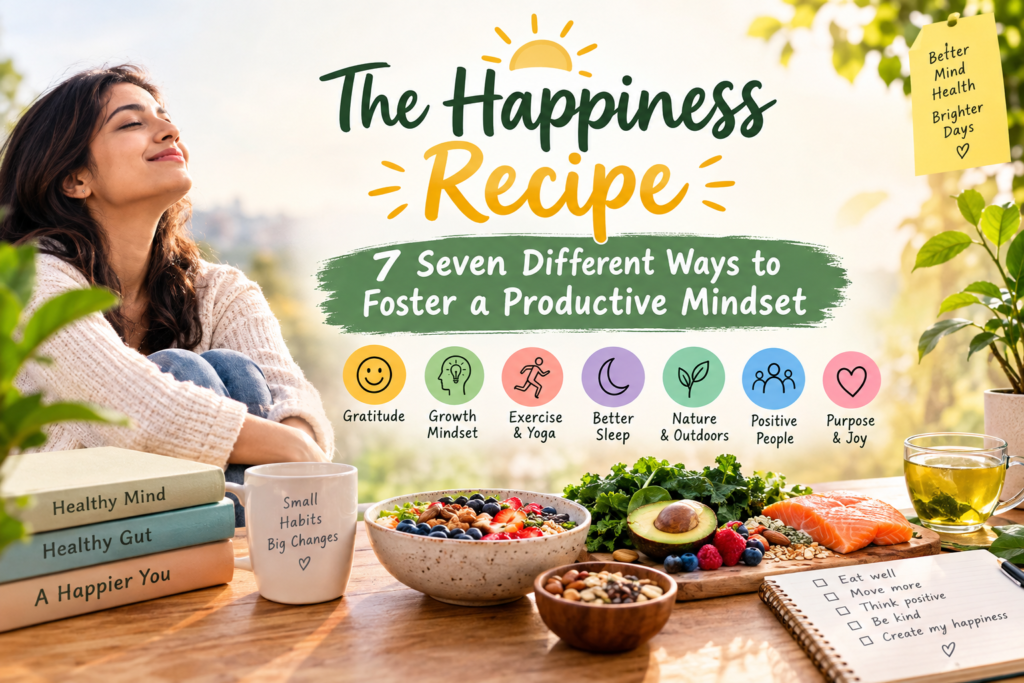
This blog suggests practices we can follow and foods we can eat in daily life to build a productive mindset and be healthy.
Foster a productive mindset

Try To Develop a Productive Mindset

Make a routine of gratitude:

Gratitude is a habit that can shift our perspectives from the bad to the good side of life. We often feel discouraged or forlorn, but when we acknowledge those in a more difficult position than us, we start to feel how lucky we are. Taking time to thank God daily boosts positivity and helps us stay healthy and productive on our path.

Assemble Negative Perspectives:

Jotting down negative thoughts can greatly reduce the mind’s grudge. This process can also help lift one’s mood, manage stress, make one more realistic, and foster productivity.

Engage in the Conducts Of Kindness:

Being an altruist or Samaritan helps release hormones like oxytocin and endorphins, which can boost our body’s happiness. Praising someone, giving a helpful tip, smiling with a full heart, helping an older adult, offering a seat on public transport, and helping a blind person cross the road can create a wave of positivity in your life.

Prioritize Exercise And Yoga:

Physical activity and yoga can help reduce stress and support emotional well-being. Research indicates that meditation, yoga, and dancing may also improve mood and support overall psychological well-being.

Inclination Towards Growth:

Accepting challenges and viewing failures as stepping stones to success opens the door to greater happiness and achievement. Learning new skills every six months can boost career growth opportunities and strengthen a person’s abilities and intelligence. Practice this step minutely because it’s a clear sign of a productive mindset

Prioritize Quality Sleep:

Poor sleep directly disrupts the brain’s ability to regulate mood-related chemicals. Aim for at least 7–8 hours of consistent sleep. A well-rested mind is far more resilient to stress and negativity.

Spend Time in Nature:

Even 15–20 minutes outdoors, away from screens, can lower cortisol and lift mood. A brisk walk in a park or simply sitting near greenery can reset the mind in a way indoor environments rarely do. Research suggests that spending time in nature can influence stress-related physiological responses, including cortisol, while supporting emotional well-being.

Nourish Your Body Mindfully:

What we eat affects how we feel. Diets rich in whole foods, omega-3s, and fewer processed sugars support stable energy and mood, while erratic eating can amplify irritability and fatigue.

Practice a Digital Detox:

Constant notifications and scrolling keep the mind reactive. Setting fixed windows to disconnect from devices, even for an hour a day, helps restore focus and calmness and fosters happiness.

Surround Yourself With Positive People:

Evidence suggests that constant exposure to negative people, virulent news, and toxic social media can badly affect your mindset. Therefore, set boundaries around media and connect only with people who have a positive outlook to improve your contentment.

Understand The Purpose Of Life:

In life, if we pursue the right purpose, happiness will come our way. Engaging in significant activities, setting career goals, and working tirelessly on them in an honest way without focusing on any other things can lead to long-term fulfillment and thus make us happy.

Fuel Your Focus: Foods That Keep You Productive

We can’t cultivate a productive mindset through practices and hobbies alone.

What we eat plays an equally important role in how sharp, energized, and focused we feel throughout the day.

Certain foods contain nutrients that directly support brain function, stabilize energy levels, and reduce mental fatigue, making it easier to stay consistent and motivated.

So, alongside the practices mentioned above, paying attention to your diet can give your productivity an added, natural boost.

Food

Key Nutrient

How It Boosts Productivity

Fatty Fish (salmon, sardines)Omega-3 fatty acidsSupports brain function and improves focus
Nuts & SeedsMagnesium, healthy fatsSteadies energy levels, reduces fatigue
BerriesAntioxidantsEnhances memory and concentration
Leafy Greens (spinach, kale)Iron, folateImproves oxygen flow to the brain, reduces sluggishness
Dark ChocolateFlavonoids, mild caffeineSharpens alertness and mood
Whole Grains (oats, brown rice)Complex carbohydratesProvides steady, sustained energy
EggsCholine, proteinSupports memory and cognitive function
Green TeaL-theanine, caffeineImproves focus without energy crashes
Health & Productivity
Wrapping Up
Happiness doesn’t come from a productive mindset; it generally comes from positive thinking. The more positive we think, the happier we can become. It’s about the deliberate choices that configure our brains and behavior. So, practicing the points above can foster lasting happiness in one’s life.

Author: N. Priyanka
A Junior Journalist passionate about reporting accurate, engaging, and reader-focused news across technology, business, education, health, entertainment, lifestyle, and current affairs. Dedicated to researching reliable sources, verifying information, and producing clear, factual content that follows ethical journalism standards.

Working closely with the editorial team, the author contributes news articles, feature stories, explainers, and trending updates while continuously developing reporting, writing, and digital publishing skills. Every article is prepared with attention to accuracy, clarity, and relevance to help readers stay informed about important events and emerging trends.

Both genetics and lifestyle contribute to one’s happiness. While some genetic predispositions exist, a significant part of our happiness depends on daily rituals and cultivating a positive attitude.
Depending on a person’s mindset and emotions, they can adapt to a new set of activities and habits within a week or two. When it comes to feeling better, some people respond quickly to exercise and gratitude, while others might need a month of consistent routines.
The quality of the diet one follows greatly affects mood and mental performance. A poor diet consisting of simple carbohydrates results in decreased mood and motivation, while a well-rounded one full of omega-3 fatty acids, antioxidants, and vitamins improves one’s mood.
I believe one should start with activities that bring feelings of happiness and contentment, such as being grateful. You don’t need to commit to all the suggested rituals to feel happier. Starting with a couple of them might be a better choice to avoid frustration.
Start with gratitude because it doesn’t take much time or energy but delivers the best results among the exercises mentioned in the chapter. It also positively affects other activities, such as kindness, positivity, mindfulness, etc.

Leave a Comment

Your email address will not be published. Required fields are marked *

Scroll to Top