How Can You Improve Your Gut Health Naturally? Tips for Better Digestion and a Healthier Microbiome
Gut health affects digestion, bowel regularity, and interactions between the gut microbiome and the immune system. The most reliable approach is not a single supplement but a combination of dietary variety, adequate fiber, hydration, physical activity, quality sleep, and stress management.
Do you always feel bloated or heavy even after taking a light meal? If so, your gut health may not be normal. You need healthy, effective tips so you don’t struggle with gas, acidity, stomach inflammation, constipation, fatigue, and a weak immune system.
The good news is you can improve your gut health naturally at home. No harsh detox juice, expensive supplements, or therapies.
So, let’s learn some evidence-based, result-driven, and Ayurveda-backed treatments that not only improve gut health naturally but also help flatten your belly.
What Is Gut Health?
Gut health refers to how well the digestive system functions and how the microorganisms in the gastrointestinal tract interact with the body. Regular bowel movements, comfortable digestion, efficient nutrient absorption, and full energy are useful signs of digestive well-being.
Your diet, sleep, stress, physical activity, illness, and medications can influence your gut health. For this reason, long-term habits are generally more valuable than relying on one “superfood.”
What Is the Microbiome?
The
microbiome is the community of microorganisms and their genes living in a particular environment. In humans, it includes bacteria, fungi, viruses, archaea, and other microbes found on the skin and inside areas such as the mouth and digestive tract.
The gut microbiome can help process certain fibers, interact with the intestinal lining, compete with harmful microbes, and communicate with the immune system. Its composition can change with diet, stress, sleep, illness, antibiotics, and other medicines.
What’s Wrecking Your Gut Health?
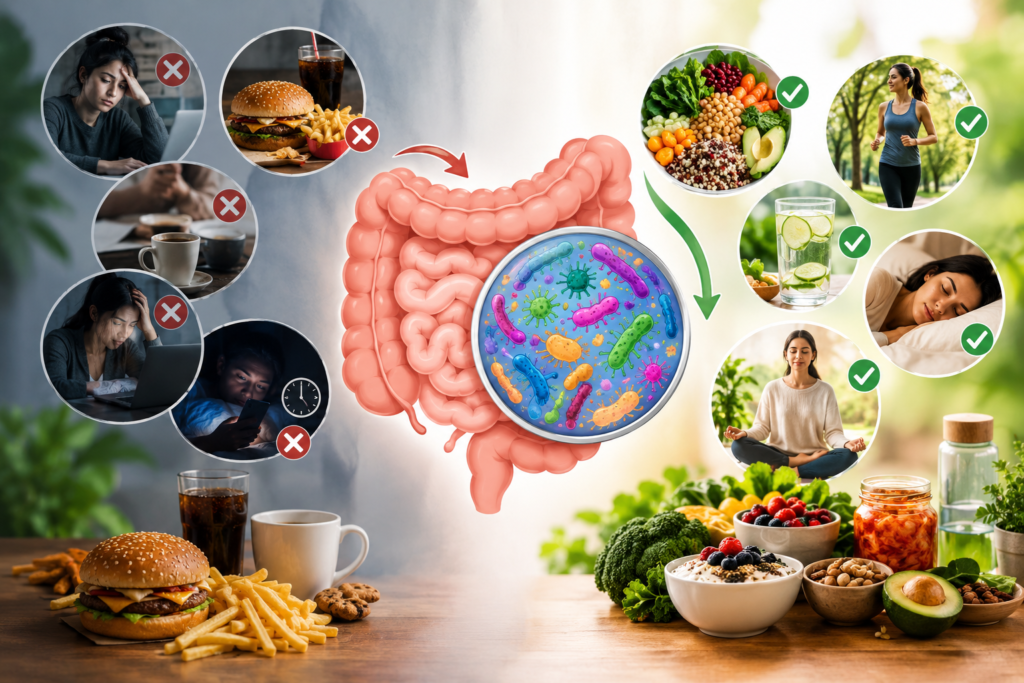
Honestly, you’re the only one damaging your gut health. You wake up in the morning and have tea first thing. After doing all the household chores, you check the time and realize it’s already late for the office, so you skip breakfast. Reaching the office, you take a cup of coffee.
When you feel hungry, you start eating unhealthy junk food and packaged items. After eating them, you feel exhausted, so you have another cup of coffee. The clock is ticking, and you have to finish the presentation by today, so you get stressed.
During your break, you eat too fast while scrolling on your phone. Regular drinking means you’ll have to use the washroom frequently, which wastes time at work, so you skip water. When you come back, you take another cup of tea, freshen up, watch TV, and have dinner after 10.30 pm.
If you’re practicing at least 3-4 of these habits, then you’re messing with your gut health and ruining it every day. Follow some gut health tips to support your digestive system.
How to Improve Gut Health Naturally
Here are some natural ways to support a healthy gut microbiome:
1. Increase Fiber Gradually
A fiber-rich diet promotes bowel movements and feeds certain beneficial gut bacteria. Add beans, lentils, oats, fruits, vegetables, whole grains, nuts, and seeds to your meals.
Increase fiber slowly and drink enough water. A sudden increase may trigger gas or bloating.
2. Eat a Diverse Diet
Rotate fruits, vegetables, legumes, whole grains, nuts, and seeds throughout the week.
3. Include Fermented Foods
Plain yogurt with live cultures, kefir, kimchi, sauerkraut, and fermented vegetables may add beneficial microorganisms to the diet.
Studies indicate that fermented foods support a healthy gut microbiome, so include at least one in your everyday diet plan.
Avoid highly refined or processed foods high in sugar, salt, oil, and fatty acids.
4. Stay Hydrated
Water helps clear bowel movements. It also helps the fiber to work effectively and
softens your stool. Aim to drink at least 2-4 liters of water every day. Always swish water in your mouth before gulping, and adjust your intake based on weather conditions and physical activity.
If you have any medical restrictions on fluid intake, then always follow your doctor’s advice.
5. Move Regularly
Movement isn’t a punishment; it’s a gift to your body. So, to be fit even in your 80’s, involve yourself in various activities like yoga, swimming, strength training, walking, cycling, and more.
Even 10-15 minutes of jogging or walking can reduce
abdominal bloating and boost your digestion.
6. Sleep Well and Manage Stress
Poor sleep and persistent stress can also cause digestive issues. Try to get at least 7-8 hours of sleep a day. Stop seeing TV or scrolling on your mobile phone after 9 pm. Take a hot foot bath and drink chamomile tea before bed, as findings suggest
chamomile may help calm the mind and ease stress.
7. Be Careful With Supplements
Probiotics are not interchangeable. Their potential benefits depend on the strain, dose, and health concern. People with weakened immunity or serious underlying conditions should discuss probiotic use with a healthcare professional.
They may be particularly useful after antibiotic use or when specific digestive concerns arise, but the right probiotic depends on the individual need.
Does Every Disease Start in the Gut?
No, not every disease starts in the gut. Other factors also play a role: infections, environmental exposures, immune responses, hormones, lifestyle, and organ-specific problems, all of which can contribute to illness.
However, the gut microbiome interacts with digestion, metabolism, immunity, and medication processing.
Research shows that changes in the gut microbiome can be linked to several intestinal and non-intestinal conditions, but this association does not prove that gut problems are the root of all diseases.
The most accurate view is that gut health is one important part of whole-body health, not the single source of every illness.
How Does a Healthy Microbiome Support Digestion and Reduce Bloating?
Gut bacteria help ferment some dietary fibers and produce compounds that may support the intestinal lining and normal bowel function. A varied diet, adequate water, regular movement, and good sleep can also help reduce constipation, a common contributor to abdominal discomfort.
Many people today turn to
GLP-1 medications to support weight loss, though these drugs are also known to commonly cause bloating and other digestive side effects as the body adjusts. Sometimes a bloated look is simply due to trapped gas rather than actual fat. Following healthy gut habits can support a more diverse microbiome, which in turn supports better digestion and metabolic function.
Microbiome changes may
contribute to functional bloating, but the relationship is complex. Food intolerances, constipation, irritable bowel syndrome, celiac disease, and other conditions can also cause bloating.
To support comfortable digestion:
- Eat slowly and chew food thoroughly.
- Increase fiber gradually.
- Choose smaller meals if large portions cause discomfort.
- Keep a food-and-symptom diary.
- Seek medical advice for persistent or severe bloating.
When to Seek Medical Advice
Speak with a healthcare professional if you have persistent abdominal pain, blood in the stool, unexplained weight loss, repeated vomiting, severe diarrhea, ongoing constipation, fever, or a major change in bowel habits.
These symptoms may require medical evaluation and should not be treated with diet or supplements alone.
Conclusion
To improve gut health naturally, stay consistent. Eat more diverse, fiber-rich foods; include suitable fermented foods; drink enough water; stay active; sleep well; and manage stress.
These habits can support better digestion and a healthier microbiome, but persistent symptoms require professional medical guidance.
Author: N. Priyanka
A Junior Journalist passionate about reporting accurate, engaging, and reader-focused news across technology, business, education, health, entertainment, lifestyle, and current affairs. Dedicated to researching reliable sources, verifying information, and producing clear, factual content that follows ethical journalism standards.