GLP-1 Drugs: How the "Fullness Hormone" Rewrites Weight Loss?
Have you ever tried weight loss before? If so, you know how frustrating the journey can be. You follow a healthy diet, go to the gym, do yoga, and stay hydrated, yet still see no significant or fast results. This is where GLP‑1 drugs come in. Wegovy® (semaglutide) and Zepbound® (tirzepatide) are two GLP-1 medications people are using insanely after their launch in the United States on January 5, 2026, and they were approved for weight loss for nearly
170,000 people.
The GLP-1 pills—Ozempic—were once taken for diabetes and blood sugar management but now have changed the pathway of the weight-loss journey. The
October 2025 Gallup poll reported a nationally representative survey in which 12.4% of respondents said they were using this class of medication for weight loss, translating to more than 30 million people in 2025.
This blog will walk you through the real concept of GLP-1 drugs and how they work. It also covers how they’re used and their serious side effects.
Keep reading to find out whether you’re the right fit for GLP-1.
What Are GLP‑1 Drugs?
GLP‑1 (glucagon‑like peptide‑1) is an incretin hormone released by the intestine after eating. It mimics a natural gut hormone that regulates our blood sugar and reduces appetite.
Mostly, it does 3 key functions:
- Boost insulin release when blood sugar rises.
- Suppress glucagon, a hormone that raises blood sugar.
- Slow stomach emptying and signal satiety to the brain.
In people with insulin resistance or
type 2 diabetes, this system doesn’t work as well. GLP‑1–based medicines restore and amplify these signals, improving glucose control while also reducing hunger and cravings.
How GLP‑1 Agonists Work in the Body
GLP-1 agonists were actually created to treat Type-2 diabetic patients by researchers in the laboratory, but soon one amazing fact came out. They found that this drug slowly reduces appetite and hunger. Once injected into the bloodstream, it stays there longer and affects cravings. It is also available in tablet form, so once taken in any form, it binds to
GLP‑1 receptors in the pancreas, gut, and brain, and one will notice these substantial changes:
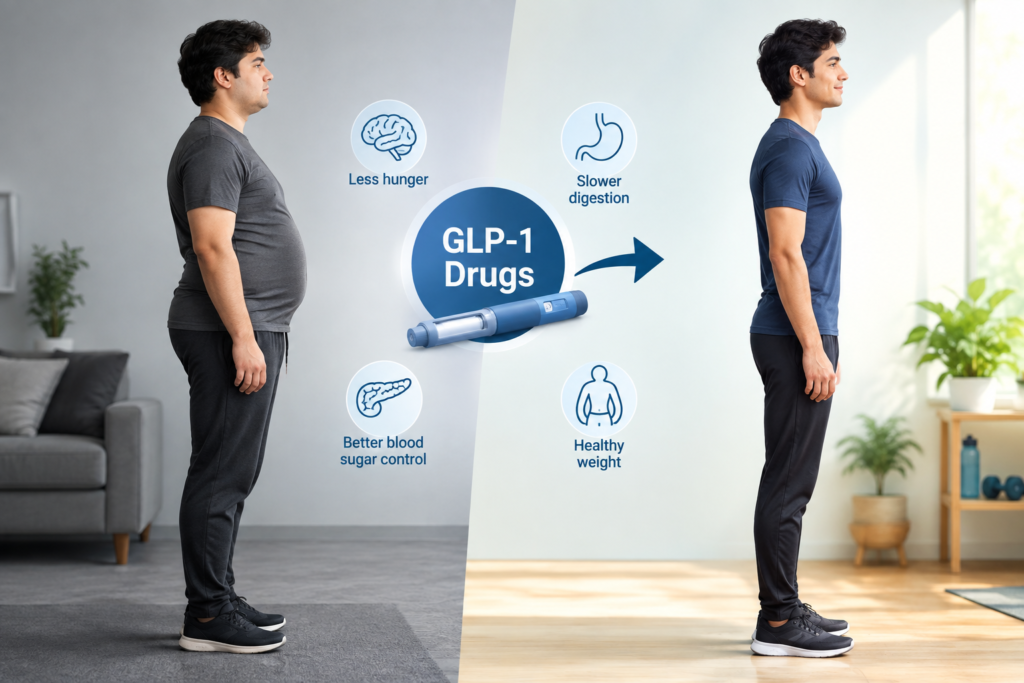
- Regulate Appetite: You feel full most of the time, so you eat less without feeling deprived.
- Better Insulin Function: You get more insulin when you need it, so you’re less likely to have low blood sugar.
- Slows Down Digestion: Your body will slowly process the foods, so your blood sugar level will always be in control, and you notice fewer cravings.
- Lower glucagon: Less glucose is released from the liver between meals.
How to Use GLP-1 Medications?
GLP-1 drugs are mostly taken once a week through injection or pills. You just need a small needle and inject into body parts with fatty tissue, for example, your thighs, arms, belly, or your upper buttocks. Most people find that a mere experiment slowly turns into a daily habit.
Semaglutide: A Closer Look at One Key Drug
Among GLP‑1 medicines, one name worth mentioning and that is
Semaglutide. It’s available under different brand names for different uses:
- Ozempic: It is mainly for people with type 2 diabetes, and it also provides cardiovascular benefits.
- Wegovy: It is originally designed to help manage weight in people who are dealing with severe obesity or overweight plus weight‑related conditions.
- Rybelsus: It is an oral form used mainly for glucose control in type 2 diabetes.
However, all these GLP-1 medications are branded, and semaglutide does the same basic thing under the hood. They activate GLP-1 receptors, boost insulin, cut glucagon, slow digestion, and reach into the part of the brain (the hypothalamus) that controls hunger. Many people on these GLP-1 agonists say they experience less internal food noise. It’s not about forcing you to stop eating or eating less.
Are GLP-1 Drugs Safe? What Are The Side Effects ?
Like all medications, GLP‑1 therapies have risks. The most common side effects are gastrointestinal:
- Nausea.
- Diarrhea or constipation.
- Vomiting.
- Decreased appetite.
- Fully forget to eat.
When our team conducts research about GLP-1 drugs, many people say that they mostly forget to eat and feel full all the time. This is because when you start taking GLP-1 drugs, food in the intestine moves slowly. Your entire body tells your brain that it’s not hungry.
Yes, this can reduce internal food noises and cravings, and you will feel less hungry, which helps your weight-loss journey, but this is where the problem starts. You have to understand one thing: GLP-1 isn’t a natural body hormone; it’s a lab-made artificial hormone, which is actually a medicine, and like every other medicine, it will definitely have some cons.
- Gallbladder issues.
- Pancreatitis.
- Acute kidney injury.
- Stomach paralysis (gastroparesis).
- Severe constipation.
- Severe hypoglycemia (extremely low blood sugar level)
- Thyroid C-cell tumors.
- Anaphylaxis (excessive Allergies).
- Diabetic retinopathy.
Reports mention that people will notice significant weight loss in the first 1-2 years, then they start regaining most of the weight within the next year. So, maintaining a healthy lifestyle is mandatory. GLP-1 only works best when you take it alongside nutrition, physical activity, sleep, and stress management.
Who Might Benefit?
According to the FDA, GLP‑1–based treatments are typically considered for:
- Adults with type 2 diabetes who need better glucose control and could benefit from weight loss.
- People with obesity (BMI ≥30) or overweight (BMI ≥27) with weight‑related conditions such as hypertension, dyslipidemia, or sleep apnea.
- Individuals who have struggled with sustained weight loss through lifestyle changes alone.
- If you have high blood pressure or high cholesterol, you will also might qualify.
Eligibility and dosing depend on your full medical history, current and past medical conditions, other medications, cost, family history, previous weight-loss attempts, and personal goals. A clinician can help weigh benefits against potential side effects and long‑term plans.
Who Are Not the Right Fit for GLP-1 Medications?
GLP-1 drugs are obviously not for you if you match any of these criteria:
- Anyone with a personal or family history of medullary thyroid carcinoma, or a condition called multiple endocrine neoplasia type 2 (MEN 2) — this is a hard no, not a “talk to your doctor first” situation.
- Anyone who’s pregnant.
- Anyone with a history of disordered eating, where the appetite-suppressing effects could do more harm than good.
None of this is something to sort out on your own. If you’re curious whether a GLP-1 drug fits your situation, that’s a conversation for your doctor, not a guess based on what you’ve read online.
Conclusion
GLP-1 drugs, the “fullness hormone,” are undoubtedly a major breakthrough in the weight-loss journey. Once a drug that was developed for type 2 diabetes, it is now helping many other individuals to control their weight loss by reducing their internal food noise and cravings.
Many people have tried to start their weight loss process but haven’t seen any progress; this drug made this transformation much easier. But you know what—this medication isn’t for everyone.
Many issues will come with it, but if you still try to adapt it, then consult with medical practitioners; only they will tell you whether it’s a match for you or not, because at the end of the day, it’s a lab-made hormone, not a natural one, so it needs a doctor’s advice!
Author: N. Priyanka
A Junior Journalist passionate about reporting accurate, engaging, and reader-focused news across technology, business, education, health, entertainment, lifestyle, and current affairs. Dedicated to researching reliable sources, verifying information, and producing clear, factual content that follows ethical journalism standards.