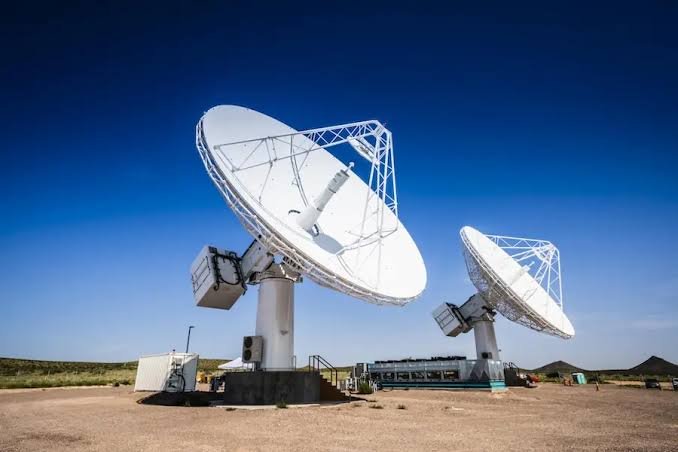
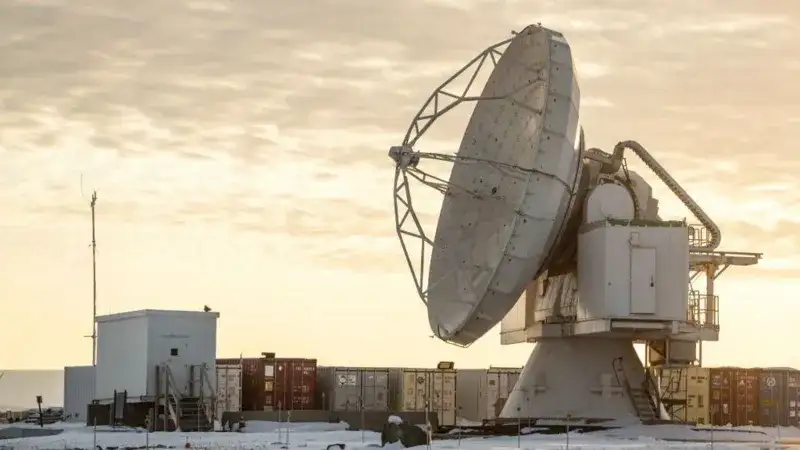
US Space Weapons Deployment Confirmed for the First Time in History
The US Space Weapons Deployment marks a first for US military policy, with officials confirming that the United States has deployed a weapon in Earth’s orbit, the country’s first public acknowledgment of offensive space capabilities. The confirmation signals a shift in how openly Washington is willing to discuss its posture in space, an arena long treated as a domain for defensive and surveillance assets rather than declared weaponry.
US Secretary of the Air Force Troy Meink confirmed the deployment while speaking at the Air, Space and Cyber Conference, describing the “on orbit” weapon as necessary to protect US forces against hostile action. Meink said the country was prepared for evolving threats but did not disclose further details about the weapon’s specific capabilities or the timing of when it was placed into orbit, leaving much of the system’s nature undisclosed even in this unprecedented acknowledgment.
Why the Weapon Was Deployed ?
Senior US military leaders have signaled for some time that they intended to strengthen the country’s offensive and defensive capabilities in space, pointing specifically to Russian and Chinese programs designed to disrupt or attack American satellites in a potential future conflict.
Those satellites underpin much of the US military’s communication, surveillance and navigation infrastructure, making their protection a growing strategic priority as rival nations expand their own counterspace capabilities.
The Legal Gray Zone Around Space Weapons
A 1967 international treaty prohibits placing weapons of mass destruction in orbit, but it leaves considerable room for other kinds of space-based capabilities. Major powers, including the US, Russia and China, have used that gap to develop systems capable of targeting rival satellites without technically violating the treaty’s core provisions.
This confirmed deployment appears to fall within that legal gray zone, representing a capability aimed at satellites and space-based assets rather than the kind of weaponry the treaty was originally designed to prevent.
Space Force's Expanding Offensive Role
The US Space Force, established in 2019 as the newest branch of the US military in over seventy years, was originally framed primarily around protecting American satellites and space assets.
That framing has shifted more recently, with President Trump issuing an executive order last year explicitly expanding the Space Force’s role to include offensive action, not just defense.
A Space Force spokesperson described the broader mission as “space control,” encompassing both kinetic and non-kinetic means to disrupt, degrade or, if necessary, destroy adversary capabilities in space, deployable for both offensive and defensive purposes as directed by military commanders.
Russia and China's Counterspace Programs
The US has pointed to specific evidence of rival activity in justifying its own posture shift. Earlier reporting indicated that two Russian satellites have likely intercepted communications from at least a dozen European satellites since Russia’s invasion of Ukraine began in 2022, potentially allowing Russian intelligence to access sensitive transmitted data or, in a worst-case scenario, exert some control over the satellites themselves.
Separately, the US previously said Russia had launched a satellite in 2024 believed to be capable of attacking other spacecraft, a claim Russia has not publicly addressed. The Space Force has also described China’s counterspace efforts as part of a broader military modernization strategy, while characterizing Russia’s approach as treating space as a decisive warfighting domain for future conflicts.
Golden Dome and the Bigger Defense Picture
The US Space Weapons Deployment ties into a larger US defense initiative known as “Golden Dome,” a planned system combining space-based capabilities and interceptor missiles intended to protect the country from missile and other airborne threats.
Framed by the current administration as a core pillar of national missile defense, Golden Dome positions space-based weaponry not as a standalone project but as one component of a broader, integrated defense architecture.
What This Means Going Forward?
With the US Space Weapons Deployment now confirmed for the first time, the US has moved space policy discussions from largely theoretical territory into acknowledged operational reality.
With Russia and China continuing to develop their own counterspace capabilities, this disclosure suggests that orbital space is increasingly being treated by major powers as an active military domain, one where deterrence, rather than purely defensive positioning, is becoming a stated part of national strategy.
Author: M Jyosri
A Junior Journalist passionate about reporting accurate, engaging, and reader-focused news across technology, business, education, health, entertainment, lifestyle, and current affairs. Dedicated to researching reliable sources, verifying information, and producing clear, factual content that follows ethical journalism standards.