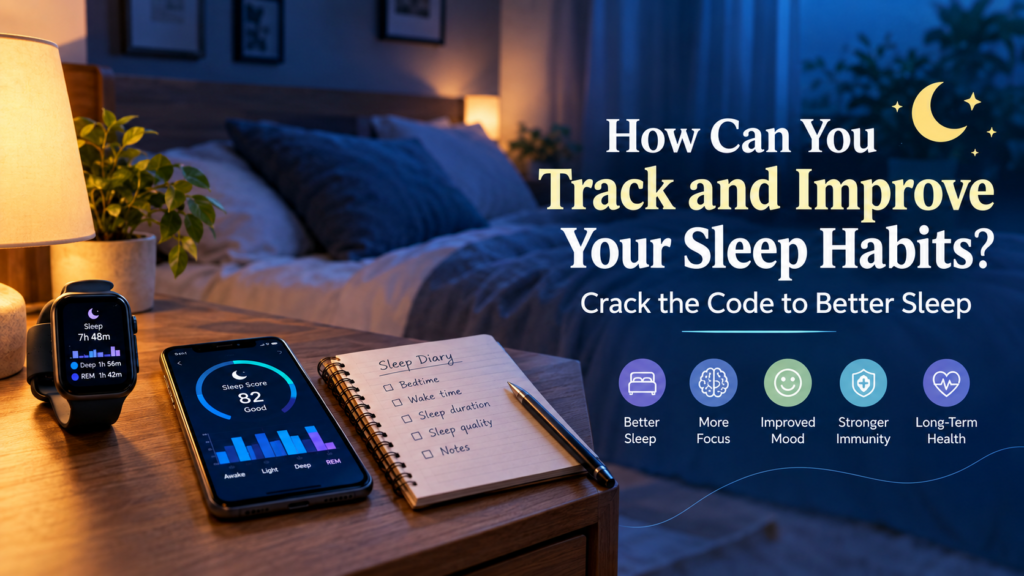
The good news? You don’t need a sleep lab to upgrade your rest. You can track it by applying a few science-backed habits and crack the code to better sleep and more refreshing nights. This blog explains why sleep tracking matters, how it works, and science-backed tips to improve sleep naturally.
Have you ever asked yourself why, on some days, you feel refreshed and why, on others, you feel absolutely exhausted even though you sleep enough? The answer lies in your sleeping habits. You just need to dig deeper to analyze it.
But how? Well, it’s not that tough or expensive; with a few simple tools and habits, you can discover how to build a healthy sleep cycle. Let’s jump:
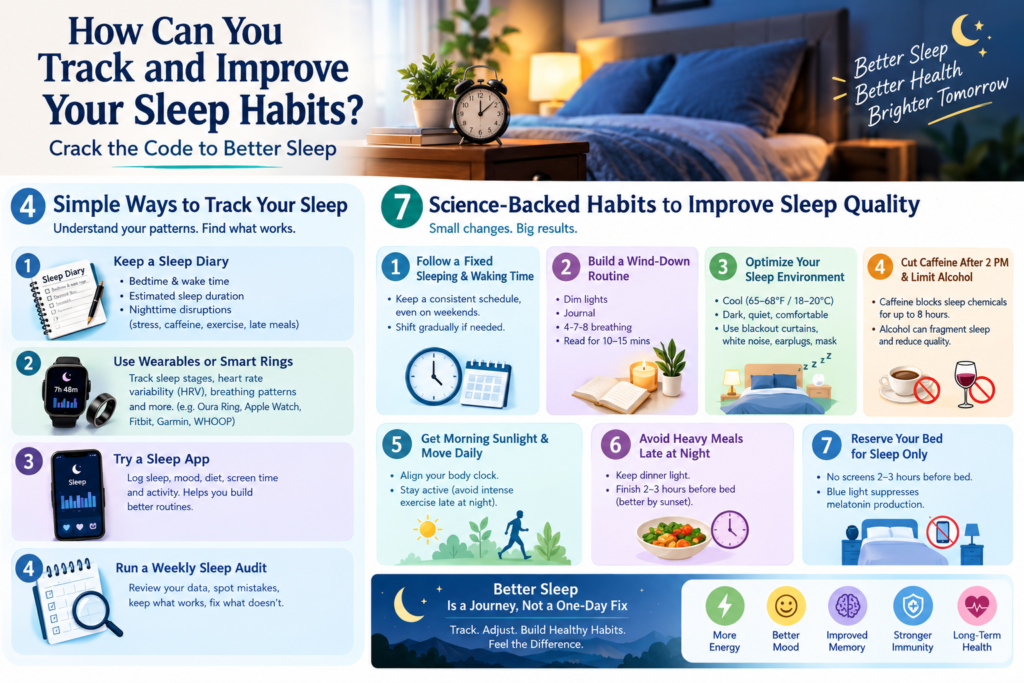
1. Keep a Sleep Diary
- Keep a short diary where you note the following:
- Your bedtime.
- Your waking time.
- Your estimated sleeping duration.
- Disruptions in sleep and mark what they’re- exercise, stress, caffeine, or a late meal.
This low-tech method sounds minimal but highly effective.
2. Use Wearables or Smart Rings
Many sleep-tracking devices are on the market today, such as the Devices like Oura Ring,
Apple Watch, Garmin, Fitbit, and WHOOP trackers. All of them can track sleep, estimate sleep stages, heart rate variability (HRV), and breathing patterns.
One study on the Oura Ring found out that this device works like a medical-grade instrument,
polysomnography, which can analyze total sleep time, deep and REM sleep, sleep efficiency, sleep latency, and arousals.
3. Try a Sleep App
Many sleep apps track your sleep and provide more information on mood, diet, screen time, and daily activity. Install one on your phone and use it to log your sleep and wake times, along with other habits. This free approach can improve your sleep naturally by helping you fix your schedule.
4. Run a Weekly Sleep Audit
Review your data once a week. Analyze your mistakes. Where have you gone wrong? Do you complete your 7-8 hours of sleep? What habits help you fall asleep easily? And what habits seem to disrupt your sleep? Drop the bad habits and stick with the ones that help.
Tracking your sleep is only half the battle; the real transformation happens when you start acting on what the data tells you. Thanks to decades of sleep research, we have amazing facts. If you implement them in your daily life, you’ll notice your sleep quality will improve.
Here are 7 habits worth building into your routine:
1. Follow a Fixed Sleeping & Waking Time
Every day, try to sleep and wake up at a specific time, even on weekends. This practice will help you to anchor your internal clock. If your schedule is currently irregular, shift your bedtime gradually rather than changing it suddenly.
2. Build a Wind-Down Routine
You will experience better sleep when you do the following:
- Dim your room lights.
- Keep a small notebook for daily journaling.
- Practice 4-7-8 breathing (inhale 4s, hold 7s, exhale 8s).
- Build a habit of reading for at least 10-15 minutes before bed every day. About 42% of people who read a book in bed reported improved sleep, compared with 28% who did not.
3. Optimize Your Sleep Environment
Before bed, create a sleep-friendly atmosphere. Keep your bedroom cool
(65–68°F / 18–20°C), dark, quiet, and comfortable. Use blackout curtains, white noise machines, earplugs, and a sleep mask if needed. Your room should feel like a peaceful sleeping sanctuary, so your brain begins to associate it with relaxation and sleep.
4. Cut Caffeine After 2 PM & Limit Alcohol
Caffeine blocks sleep-promoting chemicals for up to 8 hours. Alcohol may help you doze off, but it can
fragment your sleep and reduce sleep quality. Regular or heavy alcohol use can also contribute to alcohol dependence and other health problems. Avoid both in the hours before bed.
5. Get Morning Sunlight & Move Daily
Every morning, spend some time in open sunlight; this will keep your body clock (circadian rhythm) aligned with the day-night cycle. Do free-hand exercise or yoga asanas in open air. Stay physically active during the day, while avoiding intense exercise too close to bedtime if it makes you feel more alert.
6. Avoid Heavy Meals Late at Night
Heavy meals just before bed can interrupt your sleep cycle. Spicy meals can trigger heartburn and disrupt sleep onset. Eat your large meals during the day and have soup or light meals at night if you feel hungry. Try to finish dinner at least 2–3 hours before bedtime; better if you can finish it by sunset.
7. Reserve Your Bed for Sleep Only
Don’t create a system where only your body lies in bed while your mind stays stuck on a screen. Stop scrolling or watching TV, 2- 3 hours before bedtime, because
blue light can suppress melatonin production, the hormone that helps regulate your sleep-wake cycle.
Better sleep isn’t a one-day fix. People who have been suffering from various sleep disorders for years can notice better outcomes when they start practicing these sleep-tracking methods and healthy habits to improve their sleep cycle.
Keep a small diary or install an app to log each day’s sleep and wake-up time. You can also use wearables and run a weekly sleep audit. Build result-driven habits to improve sleep naturally. Once you start following this routine, you’ll experience a better reset.
Author: N. Priyanka
A Junior Journalist passionate about reporting accurate, engaging, and reader-focused news across technology, business, education, health, entertainment, lifestyle, and current affairs. Dedicated to researching reliable sources, verifying information, and producing clear, factual content that follows ethical journalism standards.