Rising Fever Cases in Kerala: What’s Behind The Menace
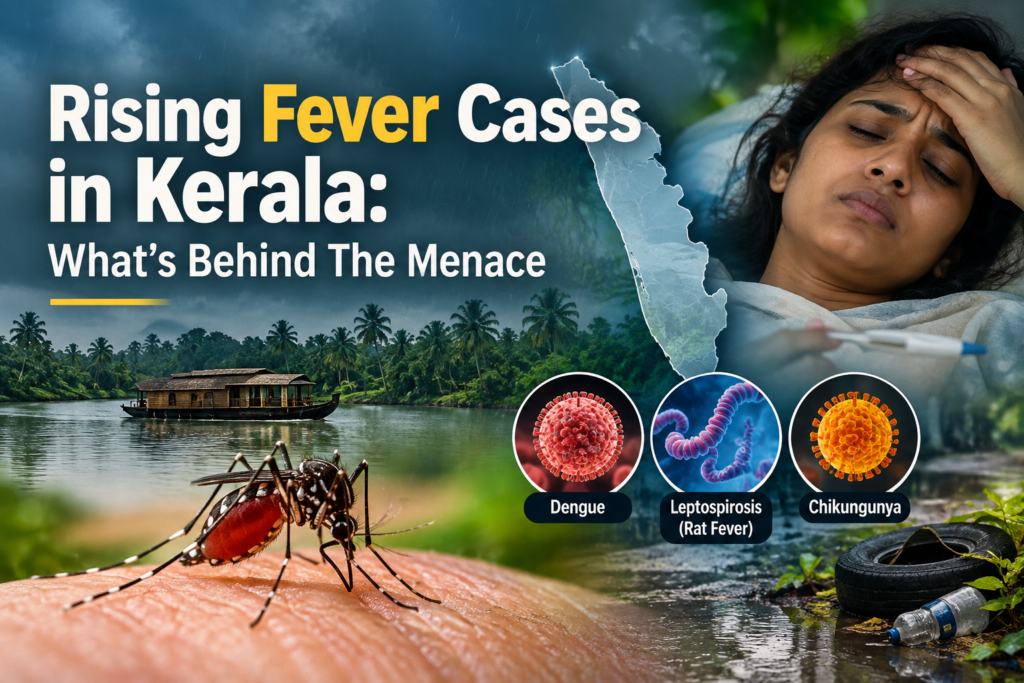
Once again, Kerala is experiencing an outbreak of viral illnesses. Cases of dengue, chikungunya, and rat fever (leptospirosis) are rising sharply.
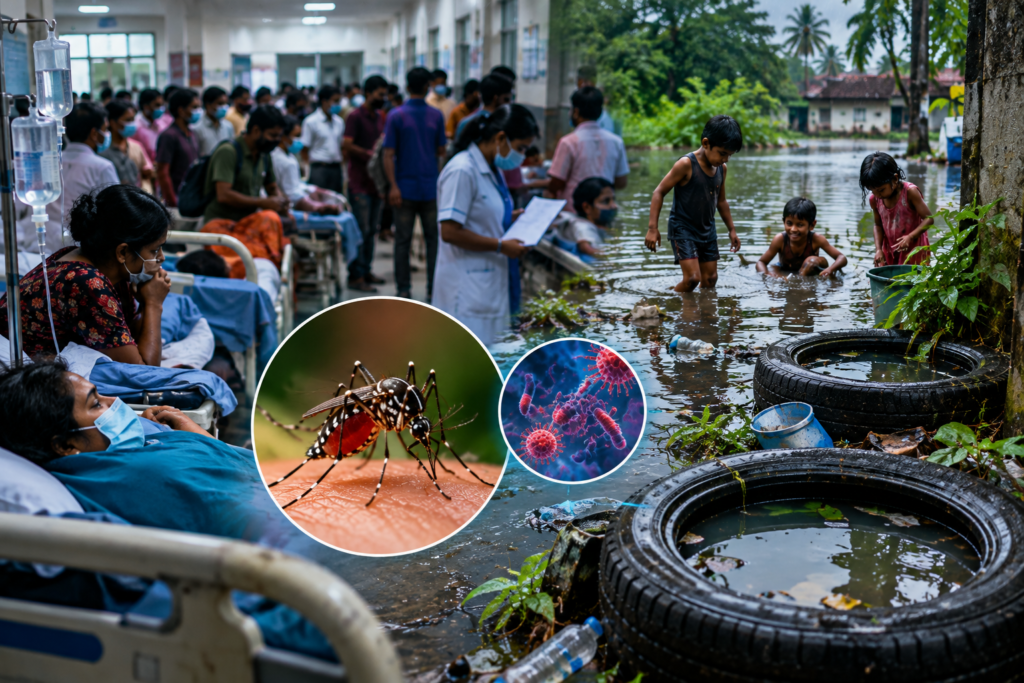
More than 10,000 people are seeking treatment for fever daily. On Tuesday alone, 11,921 people sought treatment for fever. Hospitals are reporting heavy outpatient rushes and a rising death toll linked to multiple pathogens. The monsoon creates favorable conditions for mosquito breeding and increases exposure to contaminated water and soil.
Kerala’s Directorate of Health Services maintains specific clinical guidelines for dengue, leptospirosis, and chikungunya, reflecting the state’s continued need for surveillance and early treatment.
Fever Cases Are Rising Across Kerala
Every day, nearly 10,000 patients across the state visit hospitals and seek fever treatment. Malappuram currently leads with 2,961 outpatient cases, followed by Thrissur with 1,004 patients.
Dengue was confirmed in 51 people across the state on the same day
Everything is keeping pace. Dengue is becoming alarming, affecting 51 people across the state, while rat fever was detected in 13 people and malaria in 6. Authorities also reported 3 additional cases of Shigella infection.
Districts like Palakkad, Ernakulam, Thiruvananthapuram, and Kozhikode are some of the main points of concern. Fever has also spiked alarmingly among tribal settlements in Idukki.
What Led to the Spread of These Diseases?
Kerala’s monsoon brings mosquito-borne diseases and water-associated infections almost every year, but this time it has gone out of control.
Official state preparedness documents identify dengue and leptospirosis as important seasonal risks, particularly during the June–September monsoon period.
Aedes mosquitoes that cause dengue thrive in hot, humid climates.
According to WHO, climate change and rapid urban expansion worsen dengue transmission. Intermittent rain fills potholes, roof gutters, tires, and discarded containers, creating breeding grounds for mosquitoes.
Leptospirosis, commonly known as Rat Fever, is a common disease during the monsoon. Why? Because it often starts when flooding or waterlogging increases exposure to contaminated water.
WHO states that people become infected with the rat fever bacteria when they come into direct contact with water contaminated with animals’ urine. These bacteria enter the body through cuts or mucous membranes and can quickly cause symptoms. Person-to-person transmission is possible but rare.
The infection can initially resemble several other febrile illnesses but may progress to kidney or liver failure, respiratory problems, or meningitis in severe cases.
Chikungunya spreads through Aedes aegypti and Aedes albopictus. This disease tends to increase during the monsoon and post-monsoon periods. This is mainly because waterlogging creates ideal breeding grounds for Aedes mosquitoes. They breed in small places, infect people, and maintain the chain of transmission.
How Many Deaths Have Been Reported So Far?
Kerala’s Health Department reported
9 deaths from rat fever (leptospirosis) in the past 2 weeks.
Malaria and H1N1 influenza deaths were also recorded in this window. For 2026 overall, official tallies show 104 influenza deaths, 97 leptospirosis deaths, 44 amoebic meningoencephalitis deaths, 40 dengue deaths, 40 hepatitis A deaths, and 8 Shigella-related deaths.
In Ernakulam alone, 35 communicable-disease deaths were logged between July 1 and August 28, driven largely by leptospirosis and H1N1.
Major Symptoms to Watch For
| Dengue | - High fever; severe headache;
- pain behind the eyes;
- muscle/joint pain;
- rash or red spots;
- nausea/vomiting.
|
| Rat fever (Leptospirosis) | - High fever;
- severe calf/leg muscle pain;
- headache;
- fatigue;
- red/yellow eyes (jaundice);
- reduced urine output.
|
| Chikungunya | - Sudden high fever;
- severe joint pain and swelling;
- red eyes;
- fatigue;
- nausea/vomiting.
|
| Viral fever (general) | - Fever with cough,
- sore throat,
- body ache,
- marked fatigue;
- symptoms may linger beyond a week in some cases.
|
| Influenza (H1N1) | - Fever,
- cough,
- sore throat,
- body aches,
- significant fatigue;
- can spread rapidly in households and schools.
|
What Doctors and Health Officials Have Said So Far
Doctors advise: As soon as you notice any of the above-mentioned symptoms, seek diagnosis early; don’t delay.
Dengue and leptospirosis are circulating at higher levels; Discontinuing treatment without medical guidance is one of the worst things you can do for your health.
A useful clinical principle is to consider dengue in patients presenting with fever in an endemic setting and monitor carefully for warning signs.
CDC clinical guidance specifically recommends identifying warning signs early and ensuring prompt supportive care when severe dengue develops.
The same caution applies when leptospirosis is suspected. Because its early symptoms can resemble other infections, a history of exposure to floodwater, stagnant water, wet soil, or potentially contaminated environments can be an important clue for doctors.
The CDC recommends prompt antibiotic treatment when clinical suspicion is high.
For chikungunya, doctors also need to distinguish it from dengue because the illnesses can overlap.
CDC guidance advises managing suspected chikungunya as dengue until dengue has been ruled out in relevant settings.
Doctor’s takeaway: Fever accompanied by severe abdominal pain, persistent vomiting, bleeding, breathing difficulty, confusion, jaundice, very low urine output, or extreme weakness should not be ignored. These symptoms warrant prompt medical evaluation.
How to Stay Safe as Fever Cases Rise
Prevention starts with reducing exposure.
For dengue and chikungunya:
- Remove stagnant water from containers, plant pots, tires, and other places where Aedes mosquitoes can breed.
- Use appropriate mosquito repellents, wear clothing that covers as much skin as possible, and take steps to prevent mosquito bites.
For leptospirosis:
- Avoid unnecessary contact with potentially contaminated floodwater, stagnant water, or wet soil.
- Protective footwear and gloves can reduce exposure during activities where contact is unavoidable.
People With Fever:
- People with fever should also avoid relying solely on home remedies or taking medicines without appropriate medical advice.
- In particular, aspirin and NSAIDs such as ibuprofen should be avoided when dengue has not been ruled out because of the potential bleeding risk.
- Seek prophylaxis advice (e.g., doxycycline) from a doctor if occupationally exposed.
- Wear masks in crowded indoor settings, wash hands frequently, and isolate when febrile to protect family members.
- Get tested promptly for dengue/leptospirosis/chikungunya if fever persists beyond 48 hours or if warning signs appear.
- Stay hydrated and follow medical advice; don’t self-medicate with antibiotics without consulting a doctor.
The Bottom Line
Kerala’s fever burden is not limited to one disease. It’s driven by various factors, including dengue, leptospirosis, chikungunya, Shigella, H1N1, and other viral diseases.
Weather variability and vector proliferation also play a major role. So, prevention is necessary for high human mobility, and steps should be taken for disciplined vector control.
If fever persists or warning signs appear, seek early diagnosis and medical care promptly rather than relying on self-diagnosis.
Only community participation can cut transmission and prevent avoidable deaths.
Author: N. Priyanka
A Junior Journalist passionate about reporting accurate, engaging, and reader-focused news across technology, business, education, health, entertainment, lifestyle, and current affairs. Dedicated to researching reliable sources, verifying information, and producing clear, factual content that follows ethical journalism standards.